

Chimney problems rarely announce themselves with fanfare. Most Plainview homeowners discover damage only after water has already begun seeping into the structure or visible cracks appear along the exterior brickwork. By that point, what started as a minor repair has often evolved into something far more complicated. DME Maintenance has been serving the Plainview area since 2001, and we have learned that early detection makes all the difference. A small issue caught during fall maintenance can prevent months of costly water damage throughout the winter heating season.
Plainview sits in a part of Nassau County where homes range from post-war ranch houses to more recently constructed properties. Regardless of age, every chimney on Long Island faces the same environmental challenges: salt air drift from the Atlantic and Long Island Sound, freeze-thaw cycles during winter months, and persistent moisture that finds its way into mortar joints and brick. These aren't minor inconveniences. They attack the structural integrity of your chimney system year after year. Homeowners in Plainview who use oil heat, as is common across Long Island, rely on their chimney flue to safely exhaust combustion byproducts. A compromised chimney puts that entire system at risk.
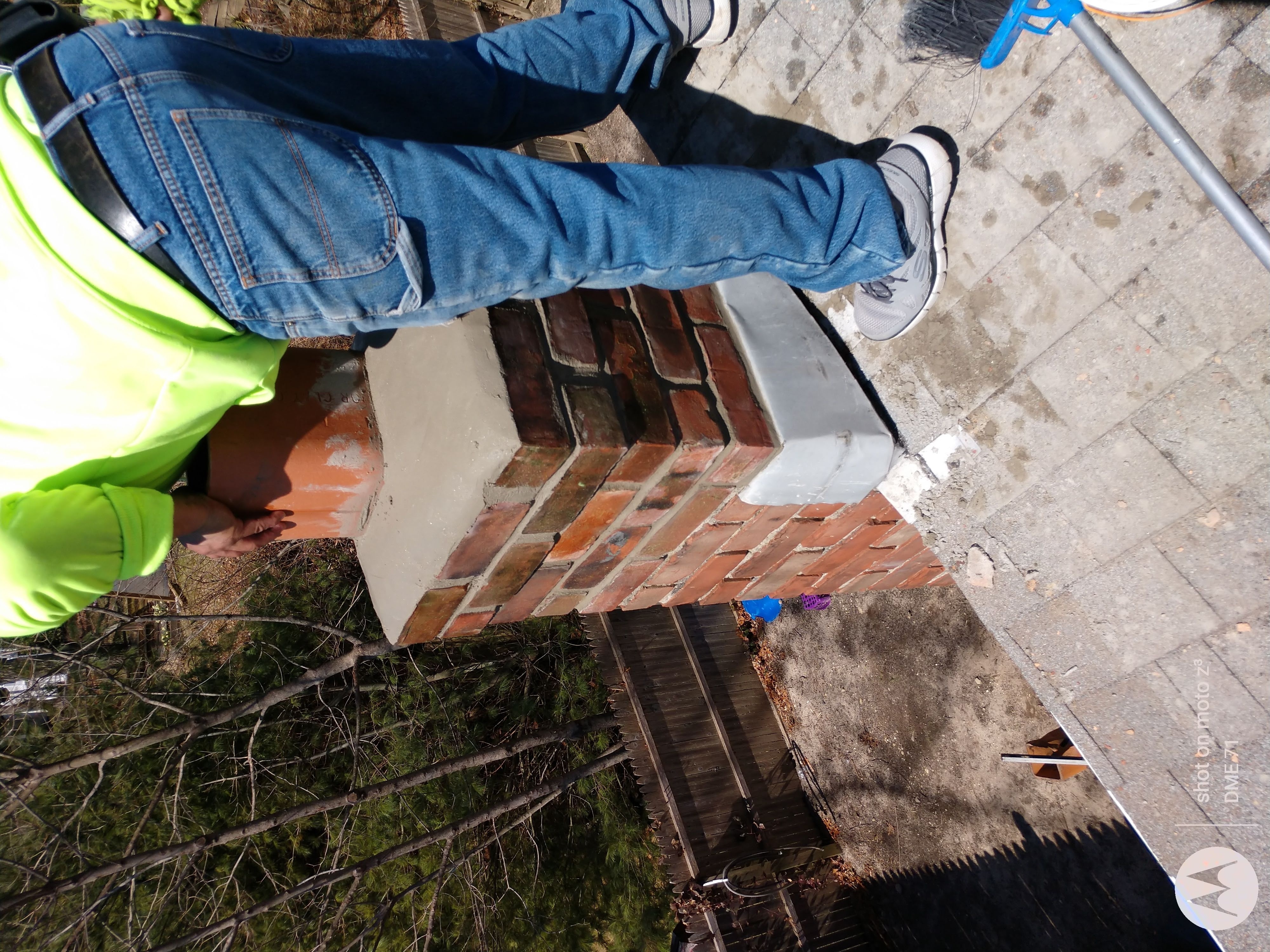
Mortar joints deserve particular attention in Plainview homes. The mortar between bricks deteriorates faster than the bricks themselves because it is softer and more exposed to weather. When joints fail, water penetrates into the chimney structure, freezes, expands, and pushes against the surrounding masonry. This cycle repeats hundreds of times each winter on Long Island. Plainview residents often notice white powdery staining on the exterior of the chimney—a sign called efflorescence—which indicates moisture is already moving through the masonry. At this stage, repointing the mortar joints becomes necessary to halt further water intrusion and restore the chimney's ability to shed rain.
Brick damage follows its own pattern. Individual bricks can crack from structural stress, thermal shock, or impact damage. More commonly, the brick face spalls, meaning the outer surface flakes away. This creates exposed interior brick that absorbs water like a sponge. In Plainview, where winter temperatures regularly drop below freezing, spalled bricks spell serious trouble. Water enters the damaged area, freezes solid, and expands with tremendous force. The brick fragments further. Within a few seasons, what was a single spalled brick becomes multiple bricks requiring replacement. Plainview homeowners who address spalling early avoid this cascading damage pattern.
Water intrusion represents the primary threat to chimney longevity in our region. On Long Island, rain doesn't just fall straight down; nor does melting snow. Wind-driven moisture seeks every opening. The chimney crown—that concrete cap atop your flue—can develop cracks that look insignificant but allow water to run down the interior of the chimney structure. Gaps where the chimney meets the roof allow water to flow directly into the wall cavity. Deteriorated mortar joints invite water deep into the masonry. Each of these pathways leads to the same destination: wet interior spaces, rotted wood framing, and mold growth. Plainview homes deserve protection from these outcomes, especially those heated by oil furnaces that depend on clean flue operation.
The structural integrity of your chimney extends beyond what you can see from the ground. Inside the flue, the clay tile liner can develop cracks that are invisible from above. Water that seeps through outer masonry can flow along the interior of this liner, eventually dripping into the chimney cavity and then into the attic or wall system. Plainview homeowners cannot diagnose this kind of damage without professional equipment. A full visual inspection using proper tools reveals problems that photographs or casual observation would miss entirely. Understanding the complete condition of your chimney structure allows you to address real problems rather than worry about imagined ones or, worse, remain unaware of damage actively happening inside your walls.
Our service area covers all of Plainview and the neighboring communities. Homeowners across Plainview have relied on DME Maintenance, a local Long Island-based chimney company, for annual chimney service for over two decades.
Seasonal timing matters for chimney repair in the Plainview area. Summer and early fall represent ideal windows for mortar work, brick replacement, and crown repair. These repairs keep your chimney ready for the winter heating season. Many homeowners in Plainview wait until cold weather arrives, then panic when they discover a problem. By then, contractors are booked solid. Worse, you may be dealing with frozen conditions that complicate the work. A proactive approach—having your chimney inspected before heating season—prevents emergency situations. Plainview residents who maintain their chimneys on a regular schedule spend less overall and sleep better knowing their system functions safely.
DME Maintenance has served the Plainview community and surrounding Nassau County for over two decades. Our owner, Douglas Eberling, built this business on the principle that honest assessment and quality work create loyal customers. We show up prepared to diagnose problems accurately. We explain what we find in language that makes sense. We prioritize repairs that matter most to your safety and home protection. If your Plainview home has a chimney, it deserves professional attention. Contact us today at 516-690-7471 to schedule an inspection. Winter heating season arrives every year without fail, and your chimney should be ready.