Plainview homeowners know that Long Island's climate is no joke for masonry structures. The freeze-thaw cycles that define our winters—where temperatures swing from below freezing at night to mild days just weeks later—put enormous stress on chimney mortar. When water seeps into the joints between bricks during a warm spell, then freezes solid the next evening, it expands and contracts repeatedly, gradually breaking down the mortar that holds your chimney together. Over time, this natural weathering process creates gaps and deterioration that compound each season. Chimney pointing and tuckpointing are specialized repair techniques that address this exact problem by carefully removing the damaged mortar from between the bricks and replacing it with fresh, properly formulated material that can withstand everything Long Island's weather throws at it.
This isn't a cosmetic fix, it's a structural necessity for homes in Plainview and throughout Nassau County, NY, especially in our older residential neighborhoods where chimneys have already endured decades of seasonal stress.
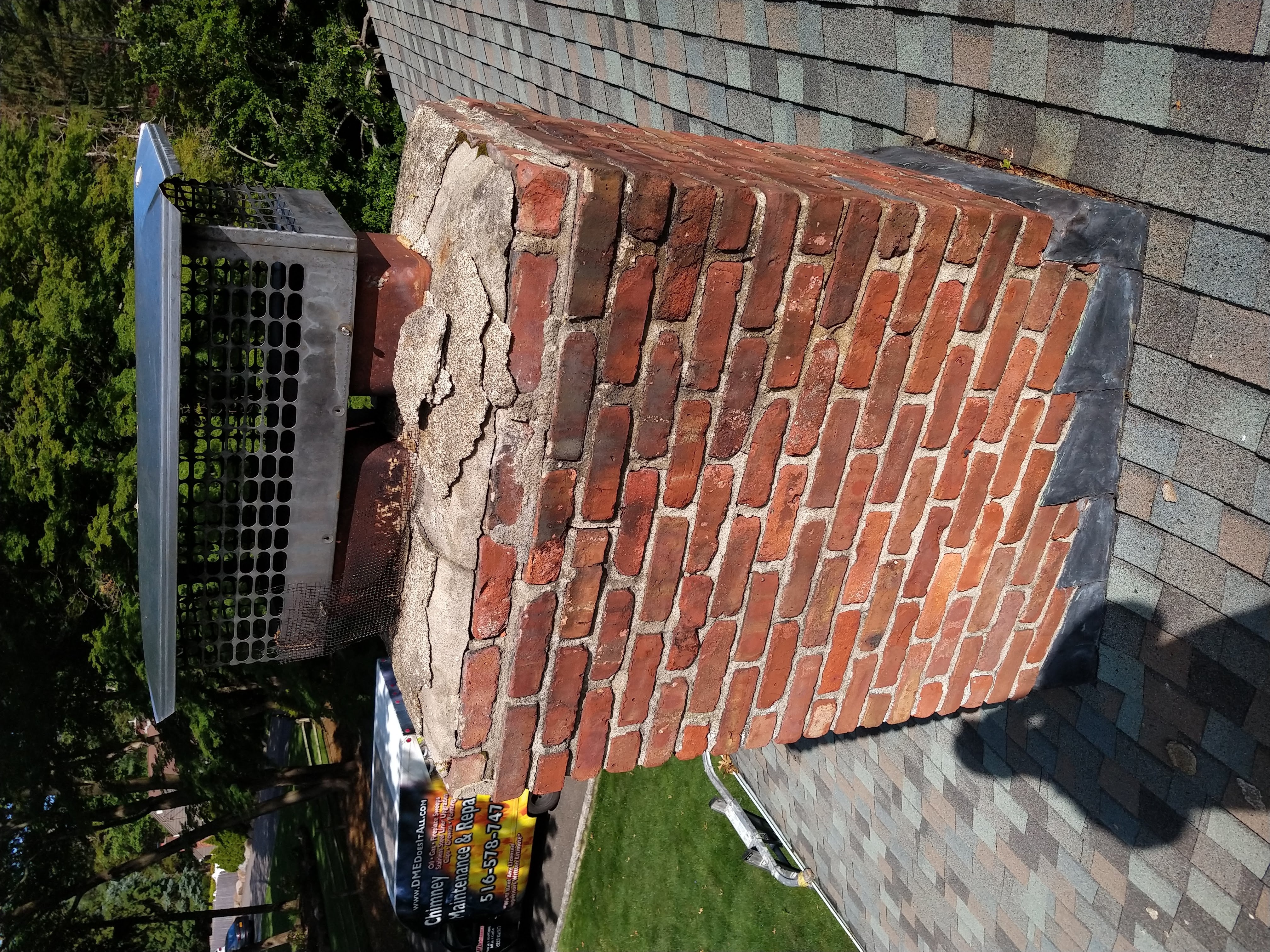
The homes built throughout Plainview over the past fifty to seventy years typically feature brick chimneys constructed with mortar that was formulated for its time, but those formulations often don't hold up well under modern conditions and continuous exposure. Many residents of Plainview live in mid-century colonials, ranches, and split-levels where the original mortar has simply reached the end of its serviceable life. You might first notice the problem when you spot white crystalline deposits on the exterior of your chimney—that's white mineral staining, a sign that water is penetrating through failing mortar joints. Or perhaps you've noticed small pieces of mortar missing, visible gaps between bricks, or worst-case scenario, water stains appearing on your interior walls or ceiling near the chimney during heavy rains. These aren't minor cosmetic issues.
When mortar deteriorates, water gets behind the brick face and into the flue system itself, which can damage the chimney structure, compromise your heating system's safety and efficiency, and even lead to moisture problems in your home. For Plainview homeowners with oil heat systems—which are still extremely common across Long Island, a water-damaged chimney becomes a serious concern, as moisture in the flue can rust metal components and create safety hazards. This is why addressing deteriorating mortar promptly is so critical.
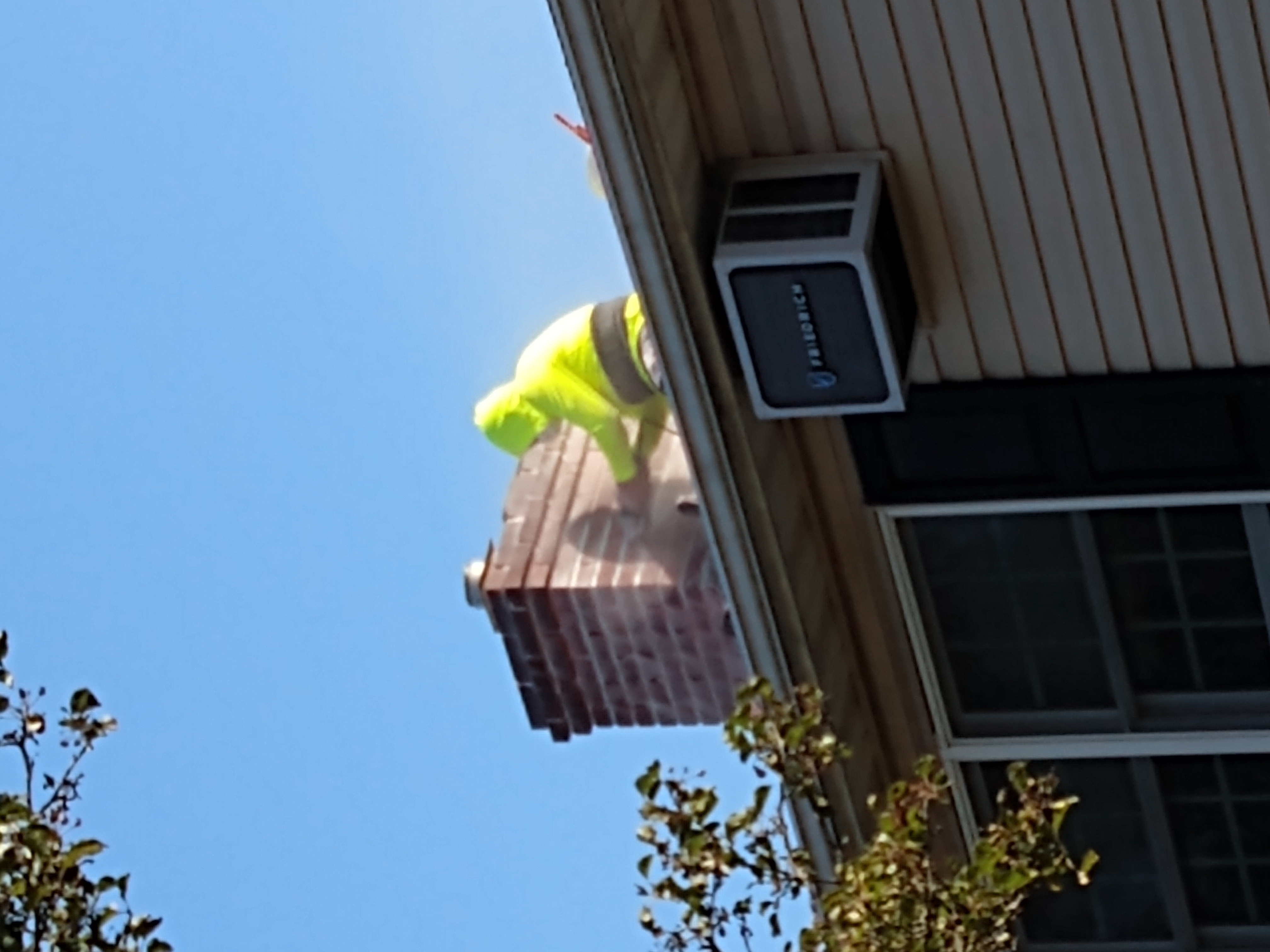
Pointing work requires precision and skill that goes beyond basic masonry patching. DME Maintenance carefullys analyze the condition of your chimney's mortar joints, assessing how deeply the deterioration extends and what type of mortar was originally used. Different mortar types require different replacement strategies—newer, overly hard mortars can actually cause problems if applied to older chimneys, because they won't allow the masonry to move slightly with temperature changes. We work methodically, removing deteriorated mortar from the joints (typically to a depth of about 2.5 times the width of the joint itself), then cleaning out all the debris so the new mortar bonds properly.
The replacement mortar is mixed to match the original composition as closely as possible, both in terms of strength and appearance, so your Plainview home's chimney maintains its authentic look while gaining the structural integrity it needs. Tuckpointing—where we also create a decorative, recessed line in the center of the mortar joint, adds both visual appeal and functional benefit by creating a small channel that directs water away from the joint itself. For homes in Plainview, especially those in established neighborhoods near the areas between Route 25 and the Old Country Road corridor, this kind of skilled craftwork preserves both the character and the structural soundness of older homes.
Spring and summer represent the ideal windows for chimney pointing work throughout Plainview and Nassau County, NY, and understanding why is important for planning. Mortar needs to cure properly, and that curing process depends heavily on weather conditions. During our warmer months, when temperatures remain consistently above 50 degrees Fahrenheit and humidity levels allow for steady, gradual moisture evaporation, newly applied mortar cures at the right pace. If you have pointing work done during fall or winter, the cold temperatures slow curing dramatically, and freeze-thaw cycles can actually damage freshly applied mortar before it's fully set. Plainview residents who wait until December to address chimney problems often find themselves waiting until the following spring for the actual repair work, because winter weather simply isn't conducive to proper mortar curing.
By scheduling your pointing work in May, June, July, or August, you ensure that the repair is completed correctly and that the mortar has months of stable weather ahead of it before the next winter arrives. You'll also want to plan ahead because proper pointing work isn't rushed; it requires careful attention to each joint, which means the timeline depends on how much of your chimney needs repair. A chimney in Plainview with moderate mortar deterioration might take a few days, while one with extensive damage could require a week or more.
The reason to handle chimney pointing promptly is clear for any Plainview homeowner who wants to protect their home. Addressing mortar deterioration now prevents far more serious problems later—like foundation damage to the chimney structure, interior water damage, damaged heating system components, or in worst cases, complete chimney reconstruction. Many residents of Plainview don't realize how quickly a small mortar problem escalates once water starts getting into the structural elements. What starts as a $2,000 to $3,000 pointing repair in year one can become a $15,000 to $20,000 structural repair in year five if water is allowed to penetrate deeper into the chimney and surrounding masonry. Beyond the practical benefits, there's also the resale value consideration.
Our service area covers all of Plainview and the neighboring communities. Homeowners across Plainview have relied on DME Maintenance, a local Long Island-based chimney company, for annual chimney service for over two decades.
If you're planning to sell your home in Plainview in the next few years, a chimney with failing mortar is exactly the kind of problem that home inspectors flag and that makes buyers nervous. Conversely, a recently pointed chimney with fresh mortar and a clean bill of health is a selling point. Plainview homeowners who maintain their chimneys properly tend to see that investment reflected in their home's marketability and appeal.
If you're seeing signs of mortar deterioration on your Plainview chimney—missing mortar, gaps between bricks, white crystalline stains, or water damage—don't wait for the problem to grow. Spring and summer weather is ideal for this work, and experienced technicians like those at plainviewchimney.com understand the specific challenges that Long Island's climate presents to chimney structures. We've been serving Plainview and the surrounding communities of Nassau County, NY since 2001, and chimney pointing is one of our core specialties. Call today at 516-690-7471 to schedule a professional chimney inspection and get expert guidance on whether your home needs pointing work. The sooner you address failing mortar, the more you protect your home's structure, your heating system's safety, and your long-term investment.